Elevator Traction Machine Supplier Guide for MRL and Conventional Systems
Introduction
The traction machine is the heart of an elevator system. Whether you specify machine-room-less (MRL) gearless designs or conventional geared configurations, your elevator traction machine supplier must match motor performance to controller capabilities, door operators, and local code requirements.
Traction Machine Basics
Traction elevators use friction between steel ropes and a sheave driven by an electric motor. Key parameters include:
- Rated load (kg)
- Rated speed (m/s)
- Sheave diameter and groove profile
- Motor type — gearless permanent magnet synchronous vs geared
- Voltage and frequency
- Braking and encoder feedback
MRL vs Conventional Machine Room
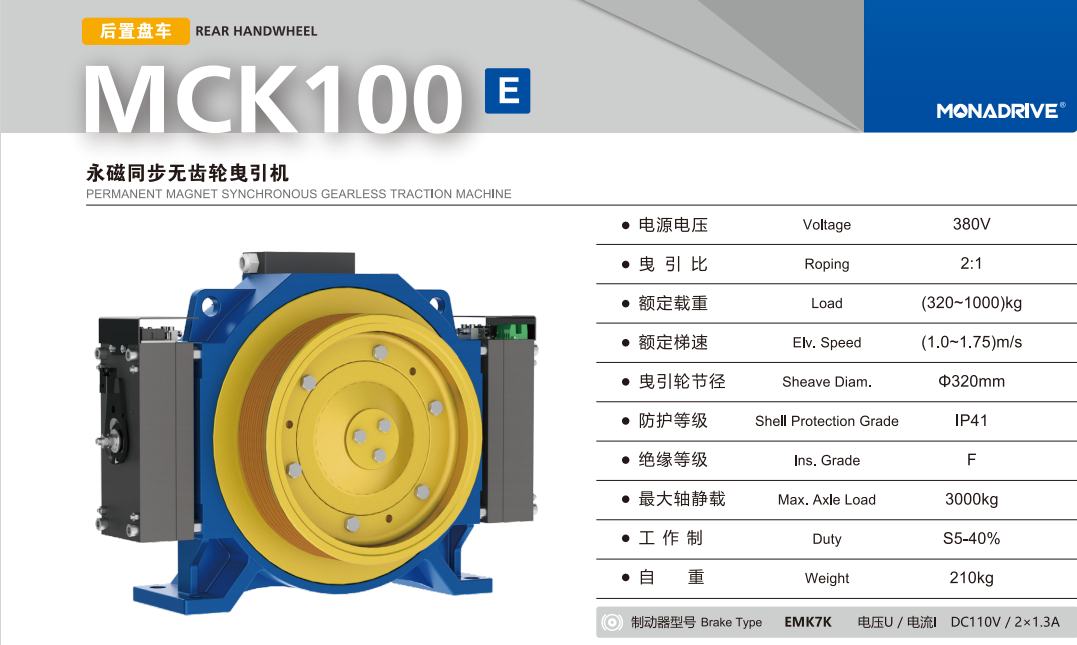
MRL (Machine Room Less) — motor and controller typically fit within the shaft footprint. Requires compact, high-torque gearless machines such as MONADRIVE MCK and MONA series units.
Conventional — motor and equipment in dedicated machine room. Often allows easier service access and broader component clearance.
Your elevator traction machine supplier should recommend based on shaft size, travel height, and maintenance culture in the target country — not only catalog defaults.
Evaluating Supplier Quality
1. Nameplate data clarity — load, speed, IP rating, insulation class
2. Encoder and brake compatibility with quoted controller
3. Noise and vibration test data for residential projects
4. Spare parts availability — bearings, brake pads, encoder modules
5. Installation manual quality — alignment, rope threading, commissioning steps
Common Specification Mistakes
- Oversizing speed without shaft and controller support
- Ignoring ambient temperature range in motor selection
- Mixing controller brands without verified motor parameter tables
- Underestimating rope wrap angle effects on traction margin
MONADRIVE Series Overview (RITECH Supply)
RITECH supplies MONADRIVE traction machines including:
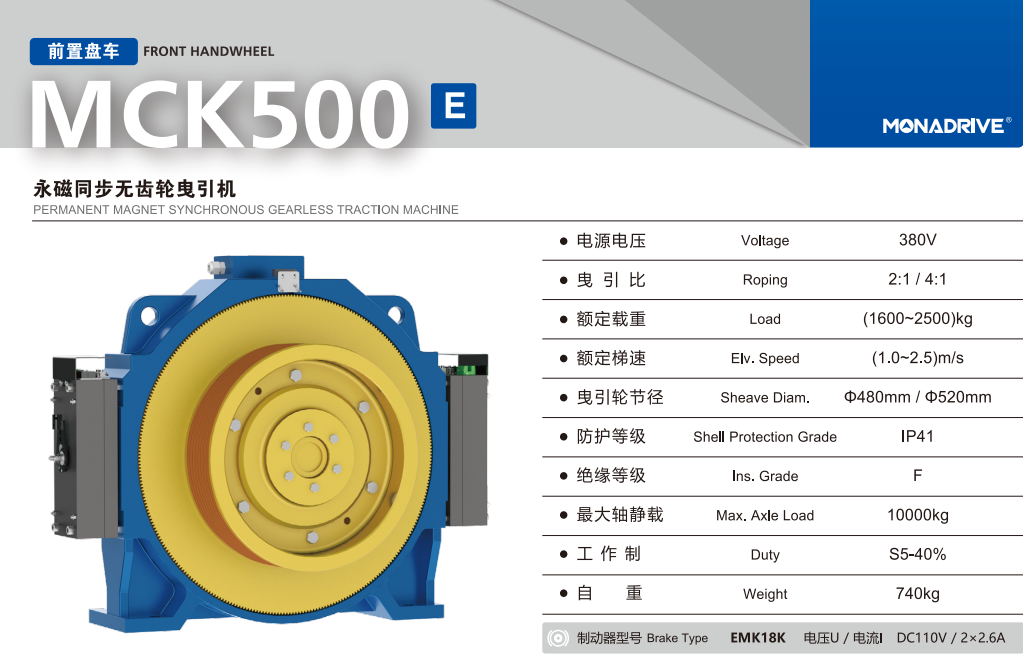
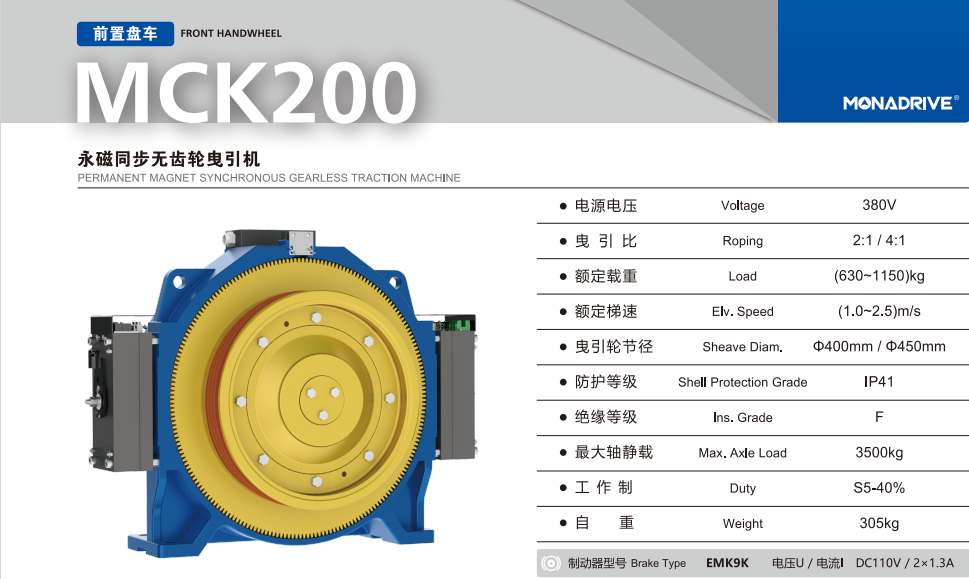
- MCK series — compact gearless options (MCK-100E through MCK-500E)
- MONA series — including MONA-200K, MONA-320
- MCB series — MCB-100, MCB-200, MCB-300 variants
This portfolio supports buyers working with one elevator traction machine supplier across multiple project types.
Conclusion
Traction machine selection defines elevator performance for decades. Partner with an elevator traction machine supplier who provides traceable specs, controller integration support, and long-term parts continuity — not just a motor on a pallet.